
Multiple tailwinds for the automobile sector, including a cut in goods and services tax (GST) rates, are keeping analysts bullish on auto stocks from a long-term perspective, even as they see the rally running its course in the near term.

The post-Covid euphoria surrounding direct equity investing has ebbed in 2025. Individual investors have turned net sellers in the domestic equity market, pulling out about 8,461 crore so far this year - a sharp reversal from the record purchases seen in 2024, according to a report by the National Stock Exchange of India (NSE).

'I cannot imagine that any NSA before Ajit Doval would have given us this kind of time and this kind of engagement. They would have offered slogans, or nothing at all. That, too, tells you something.'

The National Stock Exchange (NSE) has offered to pay Rs 1,388 crore to the Securities and Exchange Board of India (Sebi) to settle the colocation and dark fibre cases, potentially clearing the way for its much-awaited initial public offering (IPO). This is the biggest-ever settlement plea made with the markets regulator.

The Mumbai Bench of the National Company Law Tribunal (NCLT) on Tuesday gave its approval to Vedanta Limited's demerger proposal, clearing the way for the group to reorganise its operations into five distinct, sector-specific entities.

Engineering and construction conglomerate Larsen & Toubro (L&T) on Monday announced the listing of the country's first environmental, social and governance bonds on the NSE, raising Rs 500 crore through debentures. In a filing to BSE, the company said it "has listed India's first ESG bonds on the National Stock Exchange (NSE), setting a precedent for a greener and more sustainable financial future in India".

Our stock exchanges no longer belong to one state or one community.

A record amount of pension money may be finding its way into the stock market, if buying figures in the National Stock Exchange (NSE) data are any indication. Category inflows touched Rs 37,409 crore for the three months ending September 2025, shows an analysis of NSE data.

India addresses the escalating conflict in West Asia, outlining its diplomatic efforts to ensure energy security, the safety of its citizens, and advocating for a peaceful resolution through dialogue.

The unique investors' base on the National Stock Exchange of India (NSE) crossed the 12-crore mark on September 23, with the latest 1 crore addition taking place in just eight months, the bourse said on Thursday.

The initial public offering (IPO) market in India last year was hot, with companies raising over $22 billion in 2025. But half of the 350-plus companies that listed on the stock exchange last year traded below their offer price, according to a new research report released by HSBC Global Investment Research - a sobering fact despite what otherwise looked like a rush of companies eager to list on the bourses.

The Indian rupee depreciated significantly against the US dollar, reaching a new all-time low due to rising oil prices, a strong dollar, and ongoing geopolitical concerns. Domestic equity market declines and foreign investment outflows further contributed to the rupee's weakness.

The exchanges have put in place systems which generate alerts on company-specific news in the media. And, then follow up with companies to verify the news.

India should not stay on the margins of this initiative. There should be a serious debate about what would be in India's best interests asserts former foreign secretary Shyam Saran.

Shares of Reliance Industries as well as Bharti Airtel began the trade on a positive note on Wednesday after the two firms announced their partnerships with Elon Musk's SpaceX for providing high-speed internet services in India. Bharti Airtel stock opened with a gain of 5.49 pc to hit a high of Rs 1,388.25 apiece on the National Stock Exchange (NSE). Soon, it pared all gains and traded 0.77 per cent lower to Rs 1,650.10 per piece.

They don't just want better returns -- they're looking for global opportunities, more variety and smarter ways to grow their money, says Soubho Moulik, CEO, Appreciate.

The surge in the market price is also attributed to demand by retail and high-networth individual investors ahead of the IPO.
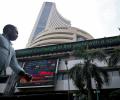
From the Sensex pack, Asian Paints, ICICI Bank, PowerGrid, Larsen & Toubro, Bajaj Finserv, Bharti Airtel, Sun Pharmaceuticals, Maruti Suzuki India, Axis Bank, UltraTech Cement and HCL Technologies were the only gainers. On the other hand, Eternal, Tata Motors' commercial vehicles arm, Mahindra & Mahindra, Tata Steel, Bharat Electronics Ltd, Tata Motors Passenger Vehicles, Trent, Tata Consultancy Services, Hindustan Unilever, and Infosys were among the laggards.

Indian stock markets recovered from early losses to close higher, driven by value buying in IT and banking shares and a rebound in the rupee.

The National Stock Exchange (NSE) on Monday cautioned investors against deepfake videos of its MD and CEO Ashishkumar Chauhan giving investment advisories. In a statement, the exchange said it has observed the use of face/voice of Chauhan and NSE logo in a few investment and advisory audio and video clips falsely created using technology. Such videos seem to have been created using sophisticated technologies to imitate the voice and facial expressions of Chauhan.

Stock exchanges are expanding the buffet of index derivatives even as the number of stocks permitted to trade in this space, generating an average daily turnover of Rs 450 trillion, is shrinking. This week, the National Stock Exchange (NSE) started issuing futures and options (F&O) contracts based on the Nifty Next 50 Index, bringing the total count of index derivatives to five.

India allows derivatives trading in 31 more stocks

US President Donald Trump announced a new global levy on imported items, resulting in a lower tariff rate for India, following a Supreme Court verdict against his previous sweeping tariffs.

They accounted for 39.1 per cent of the premium paid to trade equity options in September 2025.

There are hopes of a turnaround in overall corporate earnings after six quarters of single digit growth.

Analysts predict continued volatility in Indian equity markets due to domestic macroeconomic data, F&O expiry, global developments including US tariff policies, and geopolitical tensions.

Dwaipayan Bose explains what momentum investing is, how it works, why it generates higher returns and has higher wealth creation potential.

This marks a rebound after more than two years of underperformance during a strong rally in smallcap stocks.

Led by the country's biggest lender State Bank of India (SBI), public sector banks logged a record cumulative profit of Rs 52,603 crore in the third quarter of the current fiscal, reflecting an 18 per cent year-on-year growth.

Stocks of brokerages and market infrastructure institutions (MIIs) witnessed selling pressure after the Securities and Exchange Board of India's (Sebi's) crackdown on proprietary trading firm Jane Street. The weakness was attributed to concerns that debarment of the US firm - a prominent player in the futures and options (F&O) segment - will lead to a further decline in volumes, which are already down over 30 per cent from the peak.

Issuers have allotted nearly four times as much to mutual funds (MFs) as they have to insurance companies in recent quarters. MFs invested Rs 21,976 crore as anchor investors in initial public offerings (IPOs) on a trailing four-quarter basis, according to data from Prime Database.

'The first time India has seen two consecutive blockbuster IPO years.'

The sharp pullback in mid and smallcap stocks signals a cooling-off period in segments that previously attracted considerable investor interest.
The stage is all set for a battle among stock exchanges for setting up separate exchanges for small and medium enterprises as they top bourses.

Indian equity markets closed higher, driven by gains in PSU bank, auto, and financial stocks, following the US Supreme Court's decision on tariffs. Sensex climbed 479.95 points to 83,294.66, and Nifty advanced 141.75 points to 25,713.

Among the new entries, the largest by market capitalisation are LIC, Avenue Supermarts (DMart), Adani Green Energy, Zomato and Jio Financial Services.

'Investors may have made money in mid and smallcaps due to market momentum, but now they need to focus on fundamentals.'
Benchmark stock indices Sensex and Nifty closed on a flat note in a choppy session on Wednesday as gains in PSU banks and auto shares were offset by losses in IT stocks.

In the mid-1990s, when the shares of listed companies first began to be held in electronic form, they accounted for less than 1 per cent of the stocks bought and sold on the stock exchanges. This climbed to 99.5 per cent by 2001.

Hyundai Motor India Ltd has become the country's fifth most valuable auto firm by market valuation in its debut trade on Tuesday. Shares of Hyundai Motor India Ltd, the Indian arm of South Korean automaker Hyundai, listed at Rs 1,931, reflecting a decline of 1.47 per cent against the issue price of Rs 1,960 on the BSE earlier in the day. The stock slumped 7.80 per cent to Rs 1,807.05 during the day and finally ended at Rs 1,820.40 apiece, down 7.12 per cent.
